
Drought and Dry Wells in Powhatan & Goochland: What 2026 Means for Your Well
If the faucets at your Powhatan or Goochland home have started to sputter, or the water has stopped, this fall's drought is the obvious thing to blame. It might be the cause, and it might not. This page gives the state's October 2, 2026 drought status for each county around Powhatan, what Virginia Tech and the Virginia Department of Health tell well owners, why a failing pump is still the most common reason for no water, and how lowering a pump, deepening a well and drilling a new one compare, including the permit each one needs.
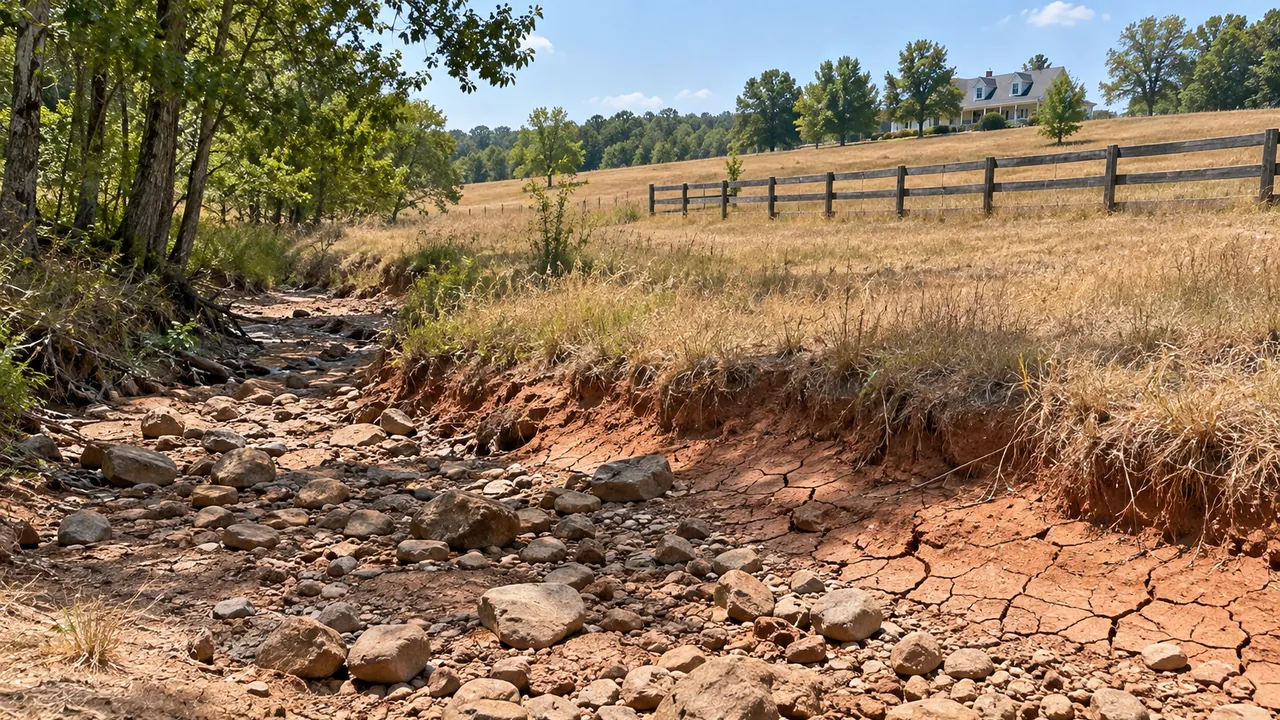
Where each county stands
The Virginia Department of Environmental Quality's drought update of October 2, 2026, the latest we found, lists these statuses:
| County | DEQ status, Oct 2, 2026 |
|---|---|
| Powhatan | Drought Warning |
| Goochland | Drought Warning |
| Amelia | Drought Warning |
| Cumberland | Drought Warning |
| Chesterfield | Drought Watch |
DEQ groups all five in its Middle James region. Chesterfield sits in that region's watch group with Hanover and Henrico counties and the cities of Colonial Heights, Hopewell, Petersburg and Richmond, while the warning group also includes Albemarle, Fluvanna, Buckingham and Prince Edward. On August 6, Chesterfield and Richmond were moved down from warning to watch, and Goochland, Powhatan, Amelia and Cumberland stayed under warning. The October bulletin says groundwater levels "generally declined consistent with seasonal patterns, although a few areas experienced slight recovery," and notes that Governor Spanberger is encouraging Virginians to conserve water. Statuses change, so check DEQ's latest update before you plan around one.
Why fall is the hard season for a well
Groundwater refills mostly in winter and spring, Virginia Tech reported on August 10, 2026, and most summer rain never reaches it. Levels usually bottom out in late September or October. In that same report, Virginia Cooperative Extension's Erin Ling described a "moderate increase" in private wells running dry. So a rainy week now won't necessarily bring a well back.
The rock matters too. Goochland's county plan describes two layers of groundwater, a water-table aquifer and a bedrock aquifer. Except in some Triassic sandstones, a drilled well there gets its water from fractures in the rock, and one that misses them can come up dry. Goochland's records of 328 home wells show drilled wells from 85 to 900 feet deep, with 83 percent yielding 10 gallons a minute or less. The shallow bored wells in those records were 30 to 73 feet deep and yielded 1 to 5 gallons a minute.
Penn State Extension's drought guidance, written for Pennsylvania but posted on Virginia Tech's well-water site, says shallow and hand-dug wells usually go dry first. Deeper wells decline more slowly but can take longer to recover.
What VDH and Virginia Tech tell well owners
- Cut back. Under a drought warning, VDH says to stop non-essential water use.
- Keep water on hand. VDH suggests a three-day supply of bottled water, about a gallon per person per day.
- Read the symptoms. Sputtering faucets or low pressure can mean the water level has dropped below the pump, according to Virginia Tech.
- Leave the pump alone. If a well runs dry, VDH says to call a professional and not adjust the pump yourself, warning of "significant injury hazards, including electrical shock and loss of limbs." Erin Ling gives the same warning.
- Report low or no flow. WTVR's August 6 drought report told well owners with low or no flow to contact their local health department. Powhatan and Chesterfield: Chesterfield Health District Environmental Health, (804) 748-1691. Goochland: Goochland Health Department, (804) 556-5843. Amelia: Amelia Health Department, (804) 561-2711. Cumberland: Cumberland Health Department, (434) 392-8187.
What you can safely check before calling: whether the power is out, whether the well's breaker has tripped (reset it once; if it trips again, leave it off), what the pressure gauge at the tank reads, and whether there's a visible leak. Don't open the pressure switch cover or touch any wiring. The no water page walks through those checks.
Don't assume it's the drought
The same Penn State guidance says the most common cause of "no water" is actually a failing submersible pump, not a dry well. It lists other causes that can look like a well running dry: electrical problems with the pressure switch, a worn pressure tank, and clogging from iron bacteria or sediment. Pumps also wear out on their own schedule; published lifespans run from about 8 to 15 years.
So before you decide the well itself has failed, have the pump, switch and tank checked. Ask the contractor how they'll tell a pump problem from a low water level before they price a fix. If the water only drops below the pump at peak use, Penn State says conserving water may be enough: flush less often, take shorter showers, and run the dishwasher and washing machine only with full loads.
Lowering the pump, deepening the well, or drilling a new one
If the water level stays below the pump, Penn State calls lowering the pump a short-term fix and lists deepening the well or drilling a new one as longer-term options. Each comes with different Virginia rules.
Lowering the pump
The pump is pulled and reset deeper in the same well, which only works if there's water-bearing depth below where it hangs now. Because the work reaches inside the well casing, Virginia's well regulations (12VAC5-630-410) require the well to be disinfected afterward. The permit rule says replacing a pump is not a well alteration; it doesn't separately address resetting one deeper, so ask your local health department (numbers above) whether your job needs a permit. Virginia's building code exempts like-for-like pump replacement from a building permit; for new wiring or controls, check with your county building office.
Deepening the well
Drilling an existing well deeper needs a written construction permit from the health department (12VAC5-630-220). Those permits are good for 18 months with one 18-month renewal, down from 54 months before November 6, 2024. The well needs a written inspection statement before it goes back into service, and the completion report is due within 30 days. In Powhatan and Chesterfield, the Chesterfield Health District's private well permit fee is $300, and VDH's statewide fee schedule sets the same $300 for a private well construction or abandonment permit, so the fee is the same in Goochland, Amelia and Cumberland. More depth doesn't guarantee more water, since yield depends on hitting fractures; a 1985 USGS report on the Virginia Piedmont says a well in crystalline rock is not likely to gain supply from drilling deeper than about 300 feet. Bob Vila's March 2023 guide puts deepening at $35 to $84 a foot, or about $3,000 to $6,000 in total, nationally.
Drilling a new well
A replacement well is new construction, so it needs its own construction permit and has to meet the state's setbacks: 50 feet from a septic tank, 50 or 100 feet from a drainfield depending on the well's class, and 15 feet from a foundation, among others. The old well then counts as abandoned once it's out of use, and closing it needs an abandonment permit. Under the 2024 rule change, the sanitary survey for an emergency replacement well can be done by an onsite soil evaluator, professional engineer or water well systems provider. For cost, Bob Vila's March 2023 guide puts drilling at $15 to $30 a foot nationally, with casing extra. At those rates, drilling alone for a 400-foot well would run $6,000 to $12,000 before casing, the pump system and the permit. We found no Virginia-specific per-foot price. The well rules page has the full setback table.
Drought and well questions
Will a few days of rain bring my well back?
Not quickly. Virginia Tech says groundwater recharges mainly in winter and spring, and that most summer rain doesn't reach it.
How can a contractor tell a dry well from a failed pump?
That's the first thing to ask them. Sputtering and air in the lines can point to a low water level, but a failed pump, switch or tank can also leave you with no water, and Penn State says the pump is the more common cause. Ask what they'll test and what they found before agreeing to lower a pump or drill.
Are bored and hand-dug wells more at risk?
Yes. Shallow and hand-dug wells usually go dry first. Goochland's shallow bored wells were 30 to 73 feet deep, and a 2014–15 Virginia Tech clinic in Amelia found drilled and bored wells both common, from 30 to 490 feet deep.
Does a drought watch in Chesterfield mean wells there are fine?
Not necessarily. A watch is a step below a warning, and Virginia Tech says groundwater usually bottoms out in late September or October. Moseley addresses on the Powhatan side of the line are under Powhatan's warning.
Do I need a permit to replace a pump that failed during the drought?
No VDH permit is needed to replace a well pump, and the state building code exempts a like-for-like swap. Deepening or drilling is different and needs a health department permit.
How this site helps
Tell us what the water is doing and we'll connect you with one independent local well and pump contractor to find out whether it's the pump, the controls or the well.
Related pages
Sources
- Virginia DEQ drought update (October 2, 2026)
- WTVR, Virginia drought update (August 6, 2026)
- Virginia Tech, groundwater remains low despite recent rain (August 10, 2026)
- VDH, responding to emergencies affecting your private well
- Penn State Extension, managing a well during drought
- Goochland County, evaluation of existing water supply and existing resource information
- USGS Water-Resources Investigations Report 85-4235, Availability and Quality of Ground Water in the Piedmont Province of Virginia (1985)
- Virginia Household Water Quality Program, Amelia County 2014–15
- 12VAC5-630-220, 12VAC5-630-410 and 12VAC5-630-380
- Virginia Register, private well regulation amendments effective November 6, 2024
- 12VAC5-620-70, VDH fee schedule and VDH onsite sewage and well fee information
- Chesterfield Health District, private well permits, Chickahominy Health District locations and Piedmont Health District locations
- Bob Vila, well drilling cost (March 30, 2023)
Water sputtering or gone?
Call or send a request and we'll put you in touch with one independent local well and pump contractor.