
Virginia Well Rules: Permits, Disinfection & Setbacks
If the well pump at your home in Powhatan, Goochland or a neighboring county needs work, a few Virginia rules decide what paperwork it takes and what has to happen before you drink the water again. This page covers when the Virginia Department of Health's private well regulations (12VAC5-630) require a permit, including the November 2024 change for pump replacements, how a well gets disinfected after work inside the casing, the basics of casing, grout and caps, the setback distances, which health district serves each county, and when the state building code skips a building permit.
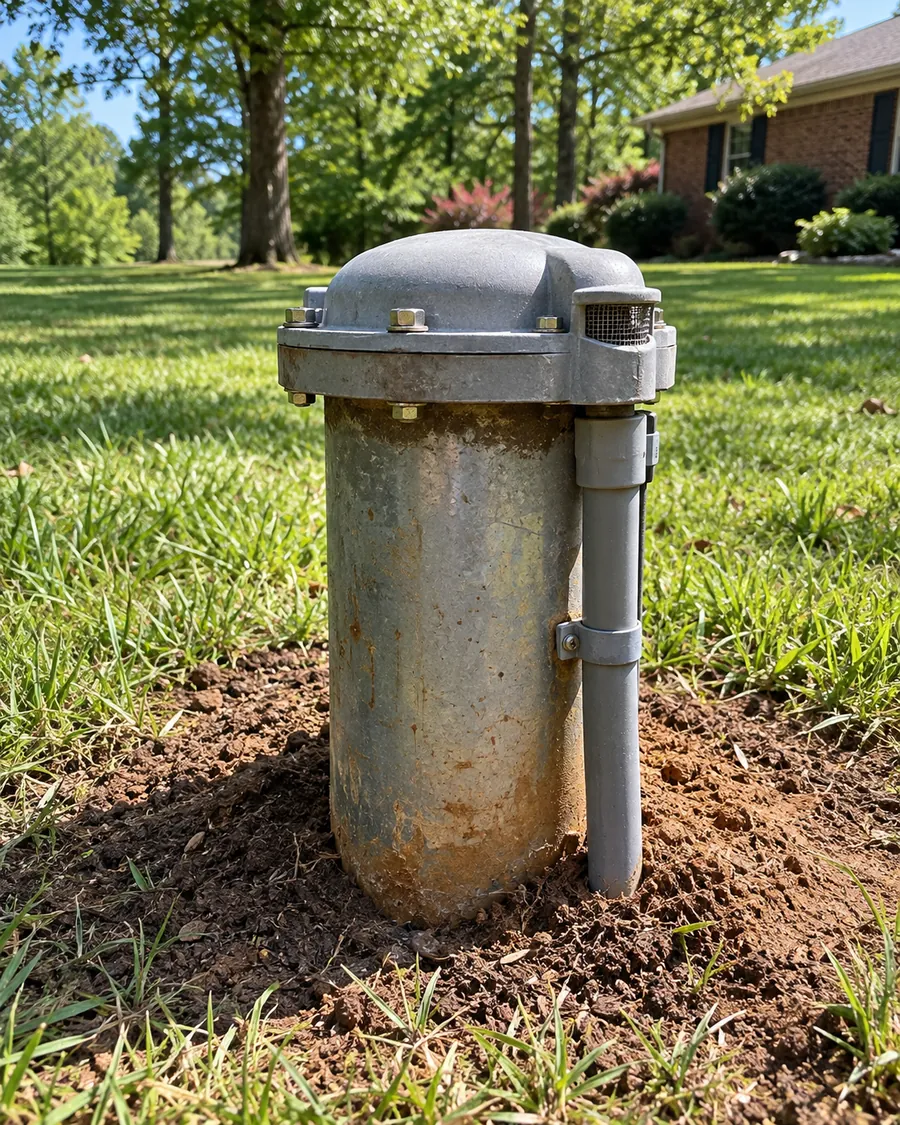
What needs a VDH permit, and what doesn't
Under 12VAC5-630-220, you need a written construction permit from the health department to construct, alter, abandon or deepen a private well. The same section lists work that is not an alteration, so no permit is needed:
- "The replacement of a well pump."
- Replacing a well seal or cap with an equivalent one.
- Extending the casing above ground.
The permit rule doesn't mention pressure tanks, which sit outside the well. A new or altered well needs a written inspection statement before it goes into service, and a construction permit is good for 18 months with one 18-month renewal. Some older VDH handouts still say 54 months; that changed in 2024.
Two definitions trip people up. The regulation's "abandoned well" (12VAC5-630-10) includes a well whose pump has been disconnected for any reason other than repair or replacement, or one that's no longer used, and abandoning a well properly takes a permit. And a replacement well is a new well, so it needs its own construction permit.
The November 6, 2024 changes
Amendments to the private well regulations took effect November 6, 2024. They:
- Spelled out that replacing a well pump is not a well alteration.
- Cut construction permit validity from 54 months to 18.
- Required well completion reports within 30 days.
- Let applicants propose their own well design.
- Allowed onsite soil evaluators, professional engineers and water well systems providers to do the sanitary survey for an emergency replacement well.
Those changes follow a longer shift. House Bill 558 (2016) told the State Health Commissioner to plan to reduce and eliminate VDH's own evaluation and design services for wells and septic systems, moving that work to the private sector, and VDH announced on July 31, 2019 that HB 888 let it make the transition gradually. VDH is still the permitting authority and can act as the "provider of last resort."
Disinfecting the well after pump work
Subsection K.2 of 12VAC5-630-410 requires a private well to be disinfected after maintenance, redevelopment or other work that reaches inside a completed well's casing. Pulling or replacing a submersible pump does that. 12VAC5-630-430 gives two ways to do it:
- Method 1: hold a chlorine concentration of 100 mg/L in the well for 24 hours.
- Method 2: bring the whole well to at least 100 mg/L and reach at least 1,000 "contact units," which is the chlorine concentration in mg/L multiplied by the hours it stays in contact. For example, 50 mg/L for 20 hours is 1,000.
Section 430 doesn't say who has to do the disinfecting or whether a bacteria test is required after pump work. A CDC and NEHA fact sheet on power outages says a well may need professional disinfection if the water is contaminated or repairs were made, and to test for coliform bacteria and nitrate before drinking. Ask the contractor whether disinfection is in the price and when the water is safe to use. Virginia Tech's county drinking water clinics, such as Powhatan's 2019 clinic at $60 a kit, are one way to get that test.
Casing, grout and caps on drilled drinking-water wells
Virginia classes drinking-water wells as Class III (12VAC5-630-360), split by how deep they're cased and grouted. Class IIIC covers any other drilled, bored, driven or jetted well. The minimums from 12VAC5-630-410:
| Class | Casing depth | Grout depth |
|---|---|---|
| IIIA | At least 100 ft | At least 20 ft |
| IIIB | At least 50 ft | At least 50 ft |
| IIIC | At least 20 ft, or 1 ft into bedrock if bedrock is shallower | At least 20 ft, or the full casing depth if the casing is shorter |
Where a pitless adapter is used, the grout stops at the base of the adapter. The casing has to stick up at least 12 inches above the ground, with a few exemptions such as certain jet pump setups. Class III wells need a watertight mechanical seal, either a sanitary seal or a pitless adapter. Open wellheads aren't allowed, and the person working on the well has to cover the bore before leaving the site. A pump job is when the cap comes off, so before the contractor leaves, look at the wellhead and make sure the cap is back on and sealed.
Setback distances
These come from Table 1 of 12VAC5-630-380 and matter most when a new or replacement well is being sited.
| From the well to | Minimum distance |
|---|---|
| Septic tank | 50 ft, every class |
| Drainfield | 50 ft for IIIA and IIIB; 100 ft for IIIC |
| Building foundation | 15 ft, or 10 ft with borate termite treatment |
| House sewer line | 10 ft if cast iron or solvent-welded PVC and the well is cased and grouted; otherwise 50 ft |
| Property line | 5 ft; 50 ft next to agricultural land of 3 acres or more |
| Animal lots and other contamination sources | 50 ft for IIIA and IIIB; 100 ft for IIIC |
Two adjustments: within a 60-degree arc directly downslope of a sewage system, the distance grows by 25 feet for every 5 percent of slope. And wells can't go in areas subject to flooding; in a floodplain, the wellhead has to sit at least 18 inches above the annual flood level.
Which health district serves your county
| County | VDH district | Phone |
|---|---|---|
| Powhatan | Chesterfield Health District | Environmental Health, (804) 748-1691 |
| Chesterfield, including Moseley and Winterpock | Chesterfield Health District | Environmental Health, (804) 748-1691 |
| Goochland | Chickahominy Health District | Goochland Health Department, (804) 556-5843 |
| Amelia | Piedmont Health District | Amelia Health Department, (804) 561-2711 |
| Cumberland | Piedmont Health District | Cumberland Health Department, (434) 392-8187 (currently located within the Prince Edward Health Department) |
Chesterfield Health District's private well permit fee is $300, "with or without OSE/PE documentation," and the same district covers Powhatan. That $300 is VDH's statewide fee for a private well construction or abandonment permit (12VAC5-620-70), so it's the same in the Chickahominy and Piedmont districts. The Goochland, Amelia and Cumberland numbers are the local health departments' main lines.
Building permits and the pump exemption
Virginia's Uniform Statewide Building Code applies in every county. Section 108.2 (13VAC5-63-80) exempts "Replacement of plumbing fixtures and well pumps in all groups," as long as it's done "without alteration of the water supply and distribution systems." The other exemptions are narrower. Like-for-like swaps of switches and receptacles don't name pump controls, and whether a repair is "minor and ordinary" is the building official's call. You can always ask for a permit and inspection, and in a special flood hazard area the building official can require permits even for exempt work.
Pressure tanks, pressure switches, new circuits and constant-pressure controller wiring aren't named in the exemptions, so check with your county building office before that work starts:
- Powhatan: the residential mechanical, plumbing and electrical permit form has a water-source checkbox (public or private well) but doesn't mention pumps or tanks.
- Goochland: Building Inspection, 804-556-5815. Its permit type list has no well pump or pressure tank item, and its inspection policy covers "well line" piping in trenches.
- Amelia: Building Department, 804-561-3039, with applications through the county's online portal.
- Cumberland: Building Inspection, 804-492-9114.
- Chesterfield: we found no county page on well pump permits; start with the residential building permit application.
Well rule questions
Does replacing a well pump need a permit in Virginia?
Not from VDH; since November 2024 the rule says outright that a pump replacement isn't a well alteration. The building code also exempts a like-for-like pump swap that doesn't change the water supply and distribution system.
Does a new pressure tank or switch need a permit?
The VDH permit rule doesn't mention tanks, and the building code exemption names well pumps but not tanks, switches or wiring. Ask the county building office for your address.
Who disinfects the well after a pump replacement?
The regulation requires disinfection after work inside the casing but doesn't say who does it. Ask the contractor to include it in the written estimate, then have the water tested for coliform and nitrate.
Do I need a permit to close up an old well I no longer use?
Yes. A well that's no longer used counts as abandoned under the regulation, and abandoning one takes a health department permit.
How long is a well construction permit good for?
Eighteen months, with one 18-month renewal. Older handouts that say 54 months predate the 2024 change.
How this site helps
We connect you with one independent local well and pump contractor, who is responsible for any permits, disinfection and inspections the job needs.
Related pages
Sources
- Virginia Administrative Code: 12VAC5-630-10, -220, -360, -380, -410 and -430
- Virginia Register, private well amendments effective November 6, 2024
- VDH, House Bill 558 plan and VDH notice on HB 888 (July 31, 2019)
- Chickahominy Health District, onsite and well FAQ
- NEHA and CDC Private Water Network, power outage facts
- Powhatan Extension, 2019 drinking water clinic flyer
- Chesterfield Health District, private well permits, Chickahominy Health District locations and Piedmont Health District locations
- Virginia USBC, 13VAC5-63-80
- Goochland Building Inspection, Goochland inspection policy and Amelia Building Department and Cumberland County Building Inspection
- 12VAC5-620-70, VDH fee schedule and VDH onsite sewage and well fee information
Need someone to look at the well?
Send a request or call, and one independent local well and pump contractor will get your details.